 Image 1 of 1
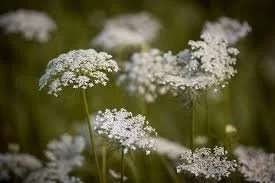
Our native Irish Wild Carot is the ancestor of our carrots and grows to 120cm. It is also known as Mealbhacán. Grown for its large heads of white flowers from July to October. The feathery, lace-like leaves appear on ridged stems. A biennial that will selfseed to provide seedlings the folllowing years.
Along our bohereens, this tall (1m) hairy annual or biennial plant brightens up the hedgerows with its lovely feathery leaves and umbels of flowers. Also known as Queen Anne's Lace on account of the delicacy of the little individual flowers and the feathery divided bracts which surround them. The creamy-white flowers are held in broad, flat umbels and the central flower of the umbel is sometimes pink or red.
It is excellent for biodiversity, attracting bees, hoverflies, and butterflies.
The best companion plants for carrots (Daucus carota subsp. sativus) are strong-scented herbs and alliums like rosemary, sage, onions, and garlic, which mask the carrot scent to deter carrot rust flies. Other beneficial companions include radishes and lettuce to break up soil and act as living mulch, alongside marigolds and chamomile to attract pollinators and beneficial insects.
Wild Carrot likes a well-drained soil in full sun.
Our native Irish Wild Carot is the ancestor of our carrots and grows to 120cm. It is also known as Mealbhacán. Grown for its large heads of white flowers from July to October. The feathery, lace-like leaves appear on ridged stems. A biennial that will selfseed to provide seedlings the folllowing years.
Along our bohereens, this tall (1m) hairy annual or biennial plant brightens up the hedgerows with its lovely feathery leaves and umbels of flowers. Also known as Queen Anne's Lace on account of the delicacy of the little individual flowers and the feathery divided bracts which surround them. The creamy-white flowers are held in broad, flat umbels and the central flower of the umbel is sometimes pink or red.
It is excellent for biodiversity, attracting bees, hoverflies, and butterflies.
The best companion plants for carrots (Daucus carota subsp. sativus) are strong-scented herbs and alliums like rosemary, sage, onions, and garlic, which mask the carrot scent to deter carrot rust flies. Other beneficial companions include radishes and lettuce to break up soil and act as living mulch, alongside marigolds and chamomile to attract pollinators and beneficial insects.
Wild Carrot likes a well-drained soil in full sun.