 Image 1 of 2
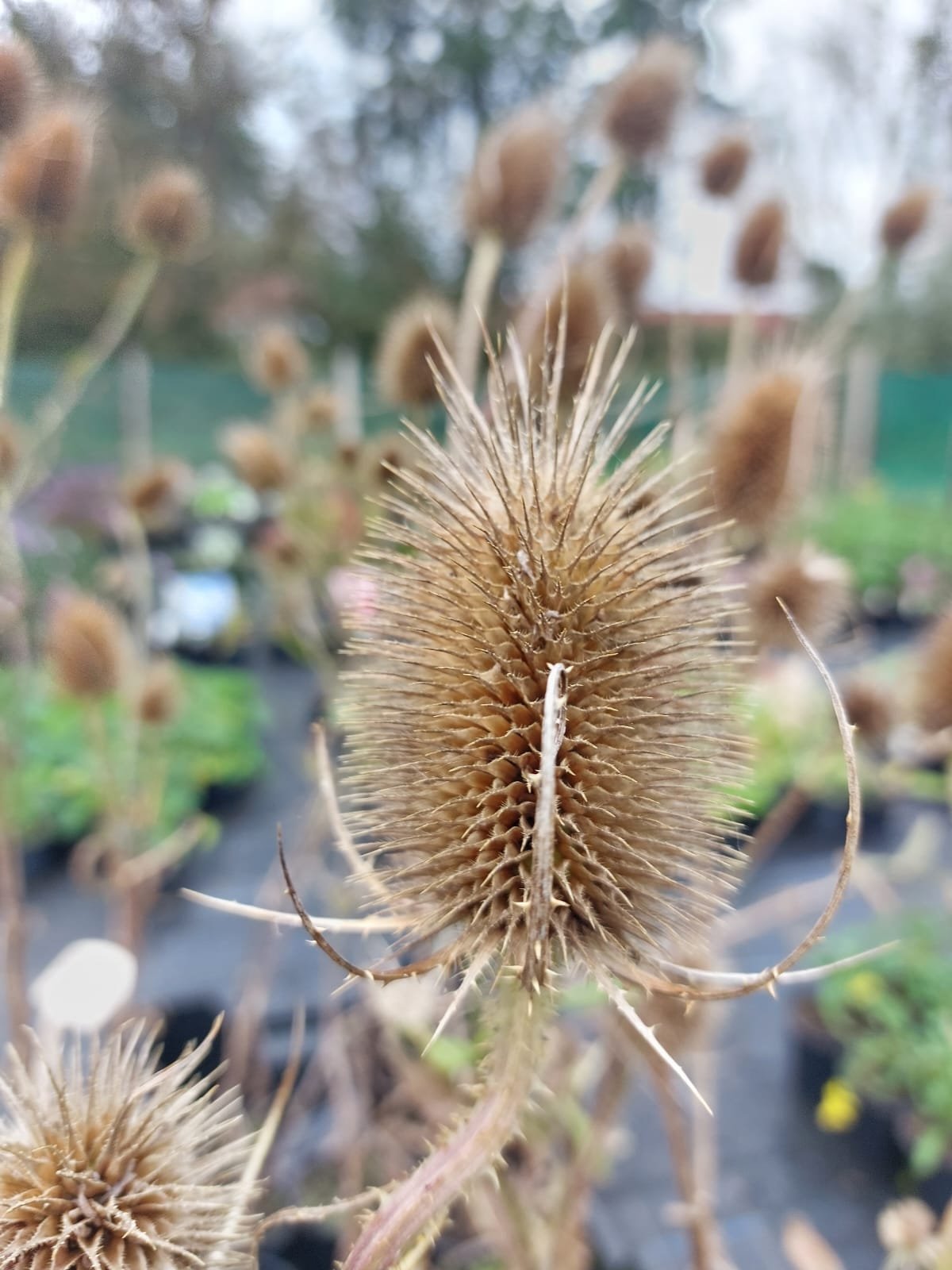 Image 2 of 2
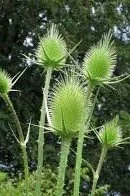
A tall, native, spiky biennial which grows to 200cm and is very attractive to bees, butterflies an birds, the latter of which eat the seeds. The tiny lilac flowers appear in bands around the spiny oval flowerheads from July to August. The tall stems and flowerheads remain intact over winter.
Handsome, distinctive, tall biennial of embankments, hedgerows and riverbanks. The Teasel can grow to a majestic two metres in height. In its first year it forms a rosette of serrated, spiny leaves and in the second year its angled, prickly stems rise up stiffly, by July producing unmistakeable, egg-shaped flowerheads.
The little pools formed at the base of the stem leaves provide drinks for insects, the flowers attract many bumblebees, butterflies and other creatures. The seeds entice those beautiful Goldfinches who arrive to feed on the seeds.
This spiny biennial acts as a structural, wildlife-friendly anchor in informal or wild gardens. Because it is a robust grower that spreads via seeds and forms large rosettes in its first year, it pairs best with other strong native perennials, pollinators, or plants that can withstand competitive, sunny, or partially shaded environments, such as Knapweed (Centaurea nigra), Foxglove (Digitalis purpurea), and Yarrow (Achillea millefolium) are recommended for creating a diverse, insect-friendly ecosystem. Bee Balm (Monarda spp.), Black-eyed Susan (Rudbeckia spp.), and Cardoon (Cynara cardunculus) complement the tall structure of teasel in the back of a border.Traditionally grown alongside other dye plants like Woad (Isatis tinctoria). Stinging Nettle (Urtica dioica), Ivy (Hedera helix), Fennel (Foeniculum vulgare), and Borage (Borago officinalis) are listed as suitable companions also.
This common teasel likes a well-drained soil in sun.
This is a biennial plant, living for two years, but will seed itself for the following year.
A tall, native, spiky biennial which grows to 200cm and is very attractive to bees, butterflies an birds, the latter of which eat the seeds. The tiny lilac flowers appear in bands around the spiny oval flowerheads from July to August. The tall stems and flowerheads remain intact over winter.
Handsome, distinctive, tall biennial of embankments, hedgerows and riverbanks. The Teasel can grow to a majestic two metres in height. In its first year it forms a rosette of serrated, spiny leaves and in the second year its angled, prickly stems rise up stiffly, by July producing unmistakeable, egg-shaped flowerheads.
The little pools formed at the base of the stem leaves provide drinks for insects, the flowers attract many bumblebees, butterflies and other creatures. The seeds entice those beautiful Goldfinches who arrive to feed on the seeds.
This spiny biennial acts as a structural, wildlife-friendly anchor in informal or wild gardens. Because it is a robust grower that spreads via seeds and forms large rosettes in its first year, it pairs best with other strong native perennials, pollinators, or plants that can withstand competitive, sunny, or partially shaded environments, such as Knapweed (Centaurea nigra), Foxglove (Digitalis purpurea), and Yarrow (Achillea millefolium) are recommended for creating a diverse, insect-friendly ecosystem. Bee Balm (Monarda spp.), Black-eyed Susan (Rudbeckia spp.), and Cardoon (Cynara cardunculus) complement the tall structure of teasel in the back of a border.Traditionally grown alongside other dye plants like Woad (Isatis tinctoria). Stinging Nettle (Urtica dioica), Ivy (Hedera helix), Fennel (Foeniculum vulgare), and Borage (Borago officinalis) are listed as suitable companions also.
This common teasel likes a well-drained soil in sun.
This is a biennial plant, living for two years, but will seed itself for the following year.